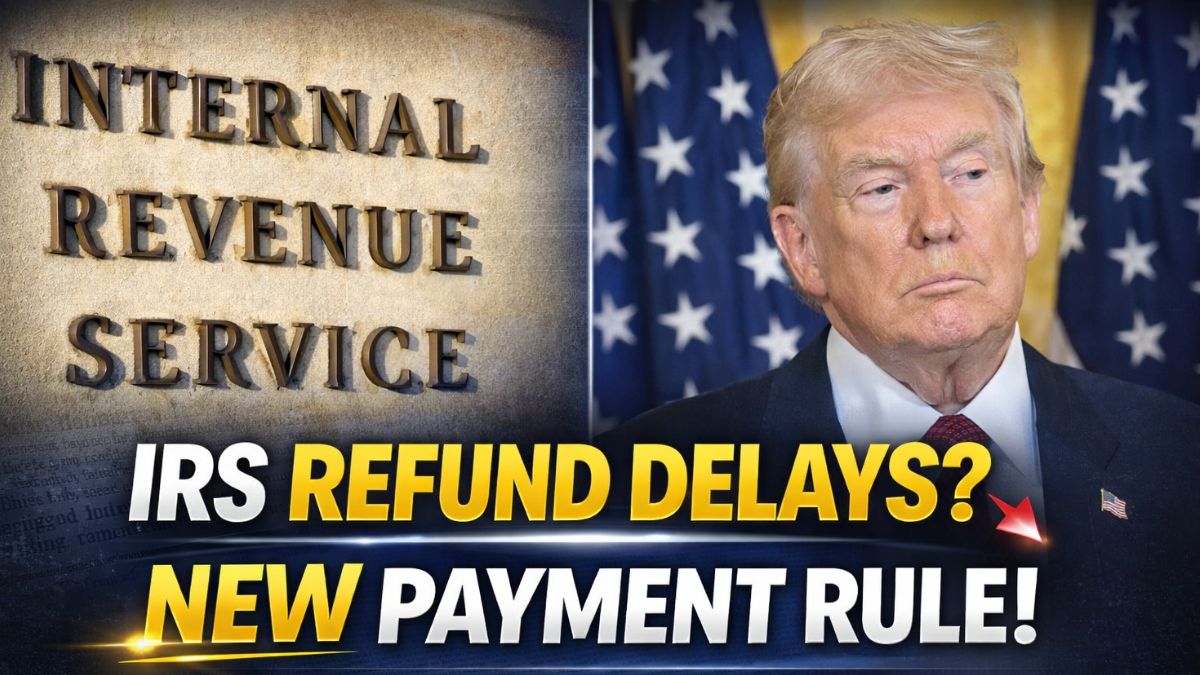
Millions of Americans look forward to receiving their tax refunds each year. For many households, that refund helps cover important expenses such as rent, groceries, medical bills, or savings. However, a new federal rule introduced under President Donald Trump could cause delays for certain taxpayers, especially those who still prefer paper checks.
The change comes from an executive order signed in March 2025. The order is titled “Modernizing Payments To and From America’s Bank Account.” Although it was signed earlier in the year, it officially went into effect in September 2025. The main goal of the order is to reduce the federal government’s reliance on paper checks and move toward faster and more secure electronic payments.
Under this new rule, the Secretary of the Treasury is required to stop sending and accepting paper checks for federal financial transactions. This includes tax refunds issued by the Internal Revenue Service. As a result, taxpayers who choose to receive their refunds through direct deposit will likely see their money much faster than those who request a paper check.

Why Direct Deposit Is Now Strongly Recommended
The IRS has stated that taxpayers who select direct deposit can generally expect their refund within 21 days from the date their tax return is accepted. Electronic transfers are processed quickly and reduce the risk of delays caused by mail delivery.
On the other hand, taxpayers who request a paper check may need to wait significantly longer. According to the IRS, paper check refunds can take up to six weeks to arrive. This longer waiting period is partly due to the new federal push to limit paper-based transactions and to prioritize electronic payments.
The government has explained that paper checks are slower, more expensive, and more vulnerable to problems. Mailing checks requires printing, processing, and postal handling, all of which add time and cost. In contrast, electronic payments can be sent directly to a bank account with fewer steps involved.

What Happens If You Enter the Wrong Bank Information
The new rule also affects taxpayers who make mistakes when entering their bank account details for direct deposit. If someone provides incorrect banking information on their tax return, the IRS may freeze the refund instead of automatically issuing a paper check.
In such cases, the taxpayer will have 30 days to contact the IRS and correct the error. During that time, they can either provide accurate bank details or request that the refund be sent as a paper check. If the mistake is not fixed within the 30-day window, the IRS will eventually issue a paper check, but this could add up to six additional weeks of waiting.
This means that accuracy is more important than ever when filing a tax return. Even a small error in a bank routing number or account number could result in a delayed refund.
यह भी पढ़े:
 Millions of Social Security Recipients Could See Smaller Tax Refunds After New “Fairness” Rule
Why the Government Is Phasing Out Paper Checks
The White House has said that the purpose of the executive order is to improve efficiency and reduce waste. According to official statements, continuing to use paper checks creates unnecessary costs, delays, and security risks.
Paper checks are more likely to be lost, stolen, altered, or returned as undeliverable compared to electronic transfers. Government data shows that Treasury checks are far more likely to face problems than digital payments. This increases the risk of fraud and requires additional administrative work to resolve issues.
In addition to security concerns, the financial cost of maintaining paper payment systems is significant. The federal government reported that maintaining the physical infrastructure and technology needed to process paper payments cost taxpayers more than $657 million in Fiscal Year 2024 alone. By moving toward electronic payments, officials believe the government can save money and reduce errors.
यह भी पढ़े:
 Why Your SSI Payment Isn’t Coming in March and What It Really Means for Your Benefits in 2026
How This Rule May Affect Different Taxpayers
For taxpayers who already use direct deposit, this change may not have much impact. Many Americans have been choosing electronic refunds for years because of the faster processing time. However, individuals who do not have bank accounts or who prefer paper checks may face longer waiting periods under the new system.
Some older adults and rural residents still rely on mailed checks. These groups may need to adjust to the new approach or prepare for extended refund timelines. Financial experts recommend that taxpayers open a bank account if possible to avoid delays and reduce the risk of lost payments.
Taxpayers should also double-check all personal information before submitting their returns. Ensuring that names, Social Security numbers, and bank details are accurate can help prevent unnecessary delays.

Planning Ahead for the 2026 Tax Season
With the rule already in effect, taxpayers filing in 2026 should consider choosing direct deposit when submitting their returns. Filing electronically and selecting direct deposit is likely to remain the fastest way to receive a refund.
It is also wise to file early. Submitting a tax return as soon as all necessary documents are available can reduce stress and allow more time to resolve any unexpected issues. If the IRS identifies errors or missing information, responding quickly can prevent further delays.
The shift toward digital payments reflects a broader government effort to modernize financial systems. While the transition may require some adjustment, officials argue that it will lead to safer, faster, and more cost-effective transactions in the long term.

The Bottom Line
The new federal rule aimed at modernizing government payments could mean longer refund wait times for taxpayers who choose paper checks. Direct deposit remains the quickest option, with most refunds arriving within three weeks of acceptance. Paper check refunds, however, may take up to six weeks or longer, especially if errors occur.
Taxpayers should carefully review their information before filing and consider switching to electronic payment methods to avoid delays. As the government continues moving away from paper-based systems, planning ahead will be key to receiving refunds on time.
Disclaimer
This article is for informational purposes only and does not constitute financial or tax advice. Tax policies and IRS procedures may change. Individual circumstances vary, and readers should consult a qualified tax professional or contact the IRS directly for guidance regarding their specific situation.