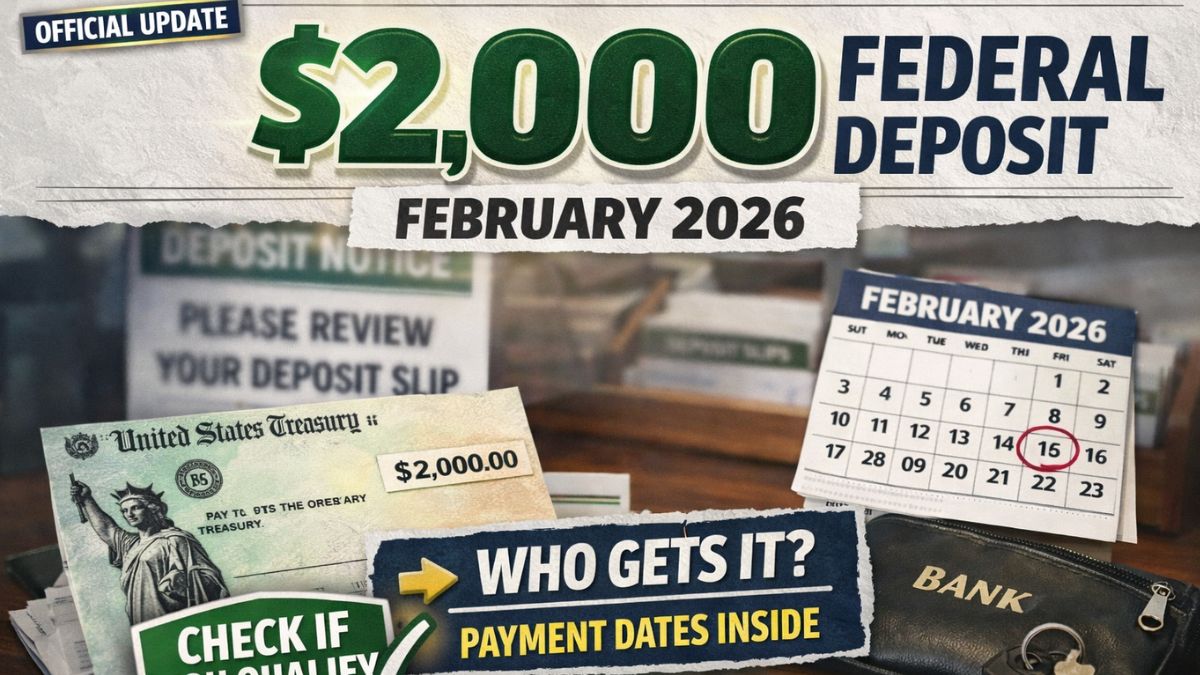
Reports about a one-time $2,000 federal deposit planned for February 2026 have created strong public interest. Many people want to understand who may qualify, how the process works, and what steps they should take in advance. This article explains the general structure such a program would follow, how eligibility is usually determined, what documents are commonly required, how payment timing is handled, and how to reduce the risk of delays. The goal is to give clear, simple guidance so readers can prepare properly and avoid confusion.
Government deposit programs normally follow a defined verification and payment system. Even when a payment is described as “confirmed,” the actual release still depends on record checks, identity matching, and account validation. That is why preparation matters as much as eligibility.
Who May Qualify for the $2,000 Federal Deposit
Eligibility for a federal deposit program is usually based on a mix of tax status, income level, residency, and identification records. In most cases, authorities look at your most recent filed tax return or your enrollment in an approved benefit program. Income limits are often used so that payments reach households below a certain earnings threshold. Filing status also matters because single filers, joint filers, and heads of household may be treated differently under program rules.

Applicants are generally expected to have a valid taxpayer identification number or Social Security number that matches government records. Residency for the required tax year is also commonly checked. If someone recently moved or changed status, updated records help avoid mismatches. People who receive federal benefits sometimes qualify automatically if their files are current and verified, but that depends on the program design.
Why Updated Records Are Important
Most payment delays happen not because a person is ineligible, but because their records are outdated or inconsistent. When names, dates of birth, or identification numbers do not match across databases, the system may pause the payment for manual review. The same thing can happen if a bank account was closed or changed but the old details are still on file.
Keeping your latest tax return filed and processed is one of the most important preparation steps. If your last return is still under review or was rejected, that can affect deposit timing. Address changes should also be updated in official portals so mailed notices and checks reach the correct place.

Documents That Are Commonly Checked During Verification
Before releasing a federal payment, agencies usually verify identity and filing records. That process often relies on your latest tax return and a valid government photo ID. Address confirmation may also be requested in some cases, especially if records show recent changes. Bank routing and account numbers must be accurate for direct deposit to succeed.
Digital copies of documents are often accepted through secure portals, which helps speed up verification. If verification is triggered, responding quickly to requests can prevent long delays. People who ignore verification messages sometimes see their payments postponed until the review window closes.
How the Payment Schedule Usually Works
Large federal payment programs rarely send all deposits on a single day. Instead, payments are released in phases across several weeks. This staggered method reduces system overload and allows time to correct flagged records. Advance notices are often sent shortly before payment batches begin. These notices may appear in an online account or arrive by mail.

Direct deposits are typically processed first because they are faster and more secure. Paper checks are usually mailed later to recipients who do not have direct deposit details on file. Processing windows can stretch from mid-month into the following weeks depending on volume. Seeing a “pending” status near the release period is common and does not automatically mean there is a problem.
How to Check Your Payment Status
Payment status is normally available through an official government services portal or hotline. Users log in with their credentials and confirm identity details to view their status page. The dashboard may show stages such as approved, pending, scheduled, or issued. Some systems also allow users to download notices for their records.
If the status does not change immediately, patience is important. Systems update in batches, not in real time. Contacting support too early often leads to standard wait instructions. It is usually best to wait until the full published processing window has passed before escalating.

Common Reasons Payments Get Delayed or Denied
Several predictable issues can interrupt payment processing. Identity mismatches between tax records and ID documents are one frequent cause. Another is an unprocessed or missing tax return for the required year. Incorrect bank information can cause deposits to fail and be returned, which adds extra processing time.
Fraud prevention filters also play a role. If the system detects duplicate claims or unusual activity, it may place a temporary hold while a review is completed. These reviews are protective but can slow down payment release. Responding quickly to any identity verification request helps resolve these holds faster.
What to Do If Your Payment Is Denied
If a payment is denied, there is usually a reconsideration or appeal process. The notice of denial normally explains the reason and gives a deadline to respond. Appeals often require copies of identification, tax filings, and proof of residency. Submitting clear and complete documents improves the chance of a successful review.
यह भी पढ़े:
 IRS $2000 February 2026 Direct Deposit Claims: What to Know About the So-Called Tariff Rebate Plan
Tracking numbers are typically issued for appeals so applicants can monitor progress. Reviews take time, but many cases are resolved once correct documentation is provided. Missing the appeal deadline, however, can close the case, so timing matters.
Practical Preparation Steps Before the Payment Window
Preparation reduces stress and prevents last-minute problems. Filing your latest tax return, confirming your bank details, and checking your contact information in official systems are basic but powerful steps. Keeping digital copies of identification and address proof ready also helps if verification is requested. People who prepare early usually experience smoother processing and faster deposits.
Example Scenario to Understand the Process
Consider a single filer who submitted their latest tax return electronically and verified their bank account details ahead of the payment window. When pre-payment notices were issued, their account showed approved status. Because their records matched across systems, their deposit arrived in the mid-month batch without delay. Another filer who used an outdated bank account had their deposit returned and had to wait for reprocessing after updating details. The difference came down to record accuracy.
यह भी पढ़े:
 IRS February 2026 Refund Timeline: Estimated Dates, Processing Speed, and Status Updates Explained
Final Reminder and Reader Guidance
Programs described as federal deposits follow strict verification and identity rules. Even when announcements sound certain, each individual payment depends on correct records and eligibility checks. Checking official portals and keeping documents updated is the safest approach. Avoid relying on rumors or unofficial messages when planning your finances.
Disclaimer
This article is for general informational and educational purposes only. It is not an official government notice and does not guarantee that any specific payment program or amount will be issued. Program rules, eligibility, and timelines can change. Always verify details through official government sources or speak with a qualified tax or financial advisor before making decisions based on payment expectations.